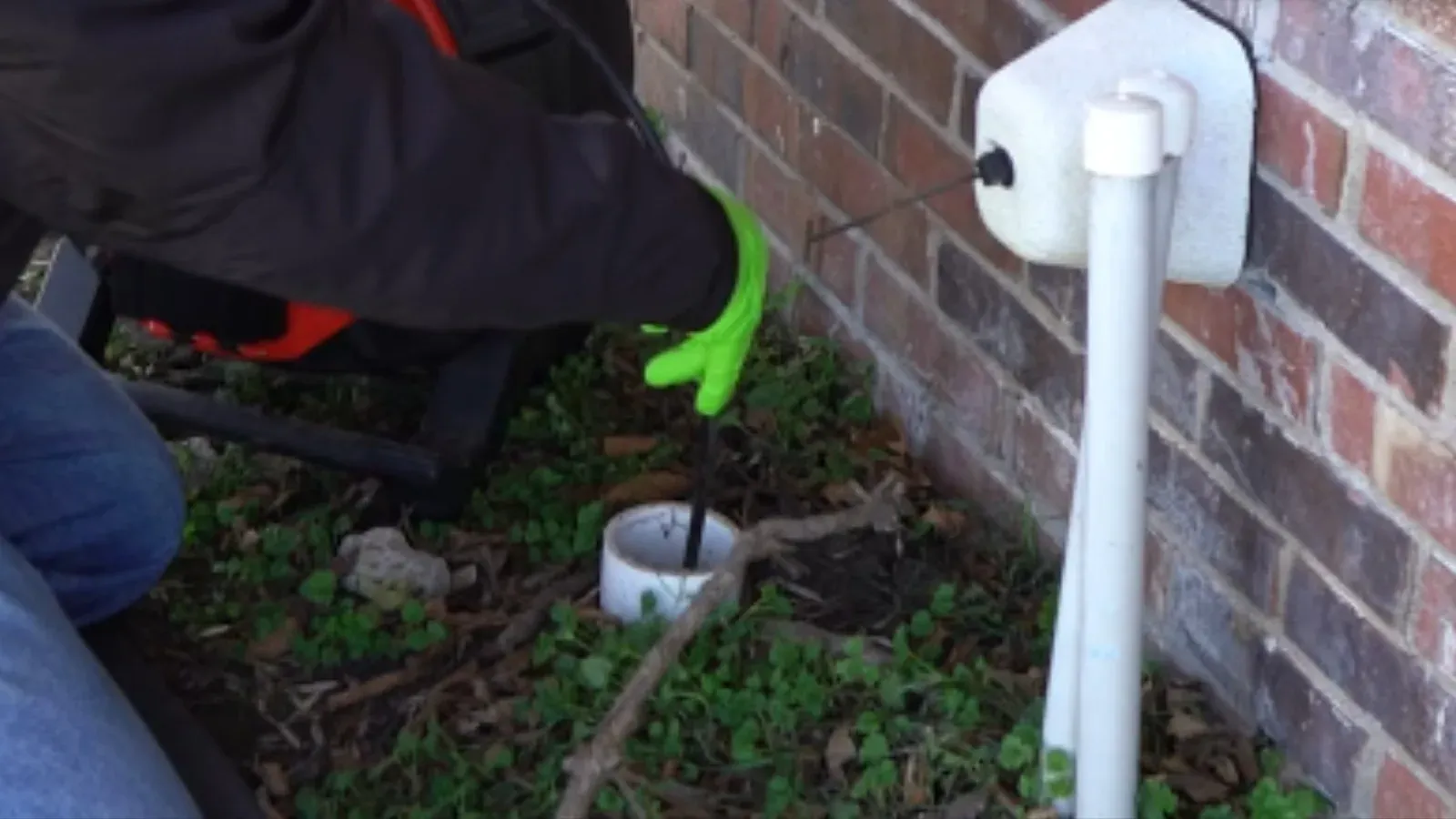
What a smoke test is
A smoke test sends a non-toxic, visible smoke into a drain or vent system from a machine called a smoke blower. Smoke moves through the pipes and escapes anywhere there is a crack, a broken joint, a missing cleanout cap or an open connection. Where it comes out is where the leak is.
The method is used for sewer gas odors, for tracking vents that are broken inside a wall and for finding connections where roots or groundwater could enter. It does not use water, and it does not need to dig.
How the test is done
- 01
Notify and seal
Occupants are told, and the system is closed so smoke stays in the pipes.
- 02
Fill traps
Every fixture's trap is filled with water so smoke cannot enter the house through it.
- 03
Blow smoke
The machine pushes smoke into a cleanout or a vent, and the plumber watches for it to appear.
- 04
Mark and record
Locations where smoke escapes are marked and photographed.
Any place smoke appears inside the house means a trap has dried out or a fitting is open. That is a finding, not a failure of the test.
Because the California Plumbing Code, which is based on the Uniform Plumbing Code (UPC), requires drain systems to be vented and trapped, a break in either path lets smoke escape where it should not.
What smoke testing can find
- A cracked or broken vent pipe inside a wall or attic.
- A missing, loose or cracked cleanout cap.
- A broken joint in a drain or lateral near the surface.
- A dry trap, which is a common cause of sewer odors indoors.
- A connection that was never sealed properly during a remodel.
It is useful when a house smells of sewer and there is no obvious cause. It is also useful before a remodel, to find vents that have been cut or buried.
Sewer odor you cannot trace?
Call (626) 898-6169.
Smoke, camera, pressure test or dye
| Method | Best at finding | Limits |
|---|---|---|
| Smoke test | Vent and drain leaks above ground and near the surface | Cannot see inside a buried pipe or find a deep break |
| Sewer camera | Cracks, roots, sags and breaks in the lateral | Does not show leaks in vents |
| Water pressure test | Leaks in supply lines | Does not test drains |
| Dye test | Fixture-to-pipe connections and cross connections | Needs a visible outlet |
A smoke test does not find leaks in water supply lines. That is a different problem, handled by the survey on our leak detection page. When the smoke test points to a buried line, a camera look follows, which is what sewer inspection is for.
Sewer smells and the public system in Temple City
Temple City is part of the Los Angeles County Consolidated Sewer Maintenance District, which maintains the public sewer mains. A smell outside, near a manhole, may be a problem with the main, and the district has a 24-hour line at (800) 675-4357. A smell inside the house is nearly always a private problem, such as a dry trap, a failed seal or a vent defect.
In a city where 57.7 percent of the homes are over 60 years old, vents and drains have usually been modified several times. A vent that was cut during a remodel decades ago is a typical find. Smoke shows where it is.
Neighboring cities have the same patterns, as our pages for Rosemead and Arcadia explain. In all of them, public agencies handle mains and homeowners handle laterals.
Is smoke safe?
The smoke used for plumbing tests is non-toxic and non-staining, but it is still smoke. It can set off smoke alarms, and people with respiratory conditions should stay out of the house if smoke is detected inside. A plumber tells you in advance and closes the system carefully.
Never use fire-based smoke or homemade smoke in a plumbing system. Use a proper machine and fluid.
Getting your house ready for a smoke test
A little preparation makes the test go smoothly. Pour water into every drain in the house, including floor drains, and run each fixture for a moment so the traps are full. Tell everyone in the house what is happening, and move pets and people with breathing conditions out of the way.
Close windows near the roof vents if you can. Smoke can rise out of a vent and drift in through an open window. Tell your neighbors if smoke may be visible from their side, and be ready for smoke alarms. If your house has an alarm system monitored by a company, let them know.
What happens with the findings
When smoke appears, we mark the spot and photograph it. A smoke leak at a vent or a cap is usually a quick repair. A leak at a buried joint leads to a camera inspection to see the damage, and that points toward a repair such as sewer line repair.
If smoke finds nothing, that is useful too. It rules out the system above ground and sends the search toward a dry trap, a failed seal at a toilet or a source outside the house. We explain what each result means and what to do next.
Smoke testing before a remodel or a purchase
A smoke test is a smart early step before a remodel that touches the drains or vents. Walls that are open give access to vents that have been cut, capped or lost, and the test shows them before new finishes cover the problem. It is also helpful when buying a house that has had several additions.
Ask the seller whether there have been odors, slow drains or past repairs, and pair the smoke test with a camera look at the lateral. Together they tell you what is above ground and what is below it, which is the full picture a buyer needs.
When to call
Call if you have a sewer smell you cannot trace, if a vent may have been damaged or if a remodel touched the drain or vent system. We choose the test that fits. Call (626) 898-6169.
Questions Temple City homeowners ask
The smoke used is non-toxic. It can set off alarms, and we notify you and take precautions.
No. Supply leaks need a pressure test and listening gear.
A dry trap is the most common cause. Others are a failed wax ring, a cracked pipe or a damaged vent.
The Los Angeles County Consolidated Sewer Maintenance District takes reports on (800) 675-4357.
No. They find different things. We use whichever fits the symptom, and sometimes both.
Sewer smell you cannot place?
Tell us where you notice it and when, and we will say whether a smoke test makes sense. Call (626) 898-6169.