When a clogged drain is an emergency
Most slow drains are an annoyance. A few are not. If water comes up in the shower when the washing machine empties, if two or more fixtures back up at once, or if you smell sewage inside the house, the blockage is probably in the main line and it will get worse with every flush.
Those are the calls we treat as same-day. We take them at night, on weekends and on holidays, and we ask you to do three things while we are on the way.
- Stop all water use, including the dishwasher and washing machine, because each gallon has nowhere to go.
- Keep toilets unflushed and move rugs and electronics away from floor drains and tubs.
- Photograph any water that has already reached carpet or cabinets for your insurer.
A single slow sink with no other symptoms can usually wait for a normal appointment window. Tell us which situation you are in when you call and we will book it that way.
How we clear a drain, from cable to camera
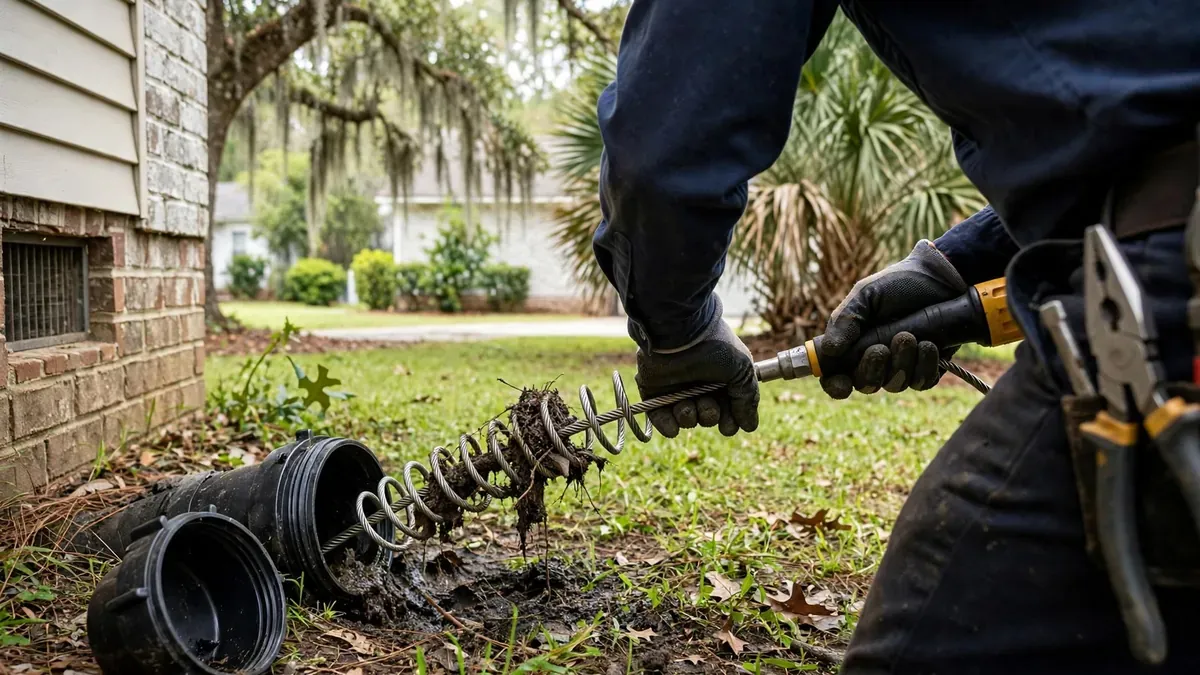
The right tool depends on where the clog sits. A bathroom sink is usually a hair and soap plug a few feet down, and a hand auger or small cable clears it. A kitchen line or a main sewer line needs a drum machine with a longer cable and a cutting head that can chew through grease and roots.
After the cable pulls back clear, a camera inspection shows whether the pipe is actually clean or whether the cable only punched a hole through a thicker blockage. That camera look is also how we spot a cracked section, a sag in the line or roots entering at a joint, which are the causes behind clogs that keep coming back.
When a line clogs repeatedly with grease or roots, cabling only buys time. Hydro jetting scours the pipe wall with high-pressure water and is the next step we recommend, and a sagging or broken line points toward sewer line repair.
The California Plumbing Code, which is based on the Uniform Plumbing Code (UPC), sets minimum slope and venting rules for drain lines. A clog that keeps returning is often a sign of a pipe or slope problem and not only debris.
Kitchen sink clogs and the grease problem
Kitchen drains clog differently from bathroom drains. Cooking fat goes down warm and liquid, then cools and hardens on the pipe wall, and coffee grounds and rice swell into it until the opening is the size of a pencil.
If the sink drains slowly and the garbage disposal hums or the dishwasher leaves standing water, the plug is usually past the trap. A plunger rarely reaches it. A cable with a cutting head does, and we flush the line afterward so the fat does not simply re-form a few feet further on.
If the disposal itself is jammed or leaking, that is a separate repair, which we cover on our garbage disposal repair page.
Drain still not moving?
Call (626) 898-6169. We clear drains day and night in Temple City and book same-day when available.
Which clog is it, and what fixes it
Where the water backs up tells you a lot before anyone opens a cleanout. Use this as a rough guide, then call us if it points to the main line.
| What you see | Likely location | Usual first move |
|---|---|---|
| One sink or tub drains slowly | Branch line or trap | Hand auger or small cable |
| Kitchen sink and dishwasher back up | Kitchen branch, often grease | Cable with cutting head, then flush |
| Shower gurgles when the washer drains | Shared branch or main line | Cable from the cleanout, camera check |
| Toilets bubble and tubs fill | Main sewer lateral | Main-line cable, camera, possible jetting |
| Clog returns within weeks | Roots, sag or broken pipe | Camera inspection, then repair plan |
Why older Temple City homes clog the way they do
More than half of Temple City's homes, 57.7 percent, are over 60 years old, compared with 32.1 percent across the Southern California region. The largest group, 30.6 percent, went up in the 1950s. Those houses sit on drain lines installed before most of today's materials existed.
Depending on the house and later remodels, the sewer lateral can be clay, cast iron or bituminous fiber pipe, and each of them fails in its own way. Clay joints let fine roots in, cast iron scales on the inside, and fiber pipe softens and ovals out. A camera tells us which one is under your lawn, which is cheaper than guessing.
Who owns the pipe matters when a main backs up. The Los Angeles County Consolidated Sewer Maintenance District looks after the public sewer mains, and the lateral from your house to that main belongs to you. If sewage is coming out of a manhole or street cleanout, the district takes reports on a 24-hour line at (800) 675-4357. If it is backing up inside your house, call us.
Main line or branch line, a one-minute check
Run the faucet in the tub furthest from the toilet, then flush the toilet nearest the cleanout. If the tub gurgles or the water level rises, both lines share a blockage downstream and the main line is the suspect. If only one fixture reacts, the plug is on that fixture's own branch and a smaller cable will usually do.
This is a guide and not a diagnosis. We confirm with the camera before recommending anything bigger than a cable.
What decides the price of drain cleaning
Homeowner's insurance usually does not pay for a clog you could have prevented, though sudden damage from a backup can fall under optional sewer backup coverage if you carry it. Check your policy. Want your real number? Call (626) 898-6169 and describe what you see. The plumber states the price before work starts.
Questions we get asked
Yes. Our line at (626) 898-6169 is answered 24 hours a day, including weekends and holidays. For a main-line backup or an overflowing drain we dispatch a plumber the same day when available and tell you the appointment window on the call.
Look for more than one fixture reacting at once. Gurgling in a shower when the washing machine drains, toilets that bubble, and water rising in a floor drain all point to the main line. A single slow sink usually means its own branch.
It depends on where the blockage sits. The Los Angeles County Consolidated Sewer Maintenance District maintains the public mains, while the lateral from your house to the main is the homeowner's. If you see sewage at a street manhole, the district's 24-hour number is (800) 675-4357.
We advise against it for anything but a trial on a small fixture. Chemical cleaners can sit in a fully blocked pipe, damage old metal fittings and burn skin when a plumber later opens the trap. A cable or plunger is safer.
Only if the cause is a soft blockage. Repeat clogs usually come from roots, a sag in the pipe or a cracked section, and a camera inspection shows which. From there the fix may be jetting or a repair, and we explain the options before work starts.
Stop running water, leave toilets unflushed and move belongings away from floor drains. Do not pour chemicals into a backed-up line. If sewage is on the floor, keep children and pets out of the area.